Honest Reader Pen Reviews From Real Use, Not Ads
No sponsorships, no fluff. What holds up, what doesn’t, and where the marketing oversells — built from actual daily reading, homework, and testing use.
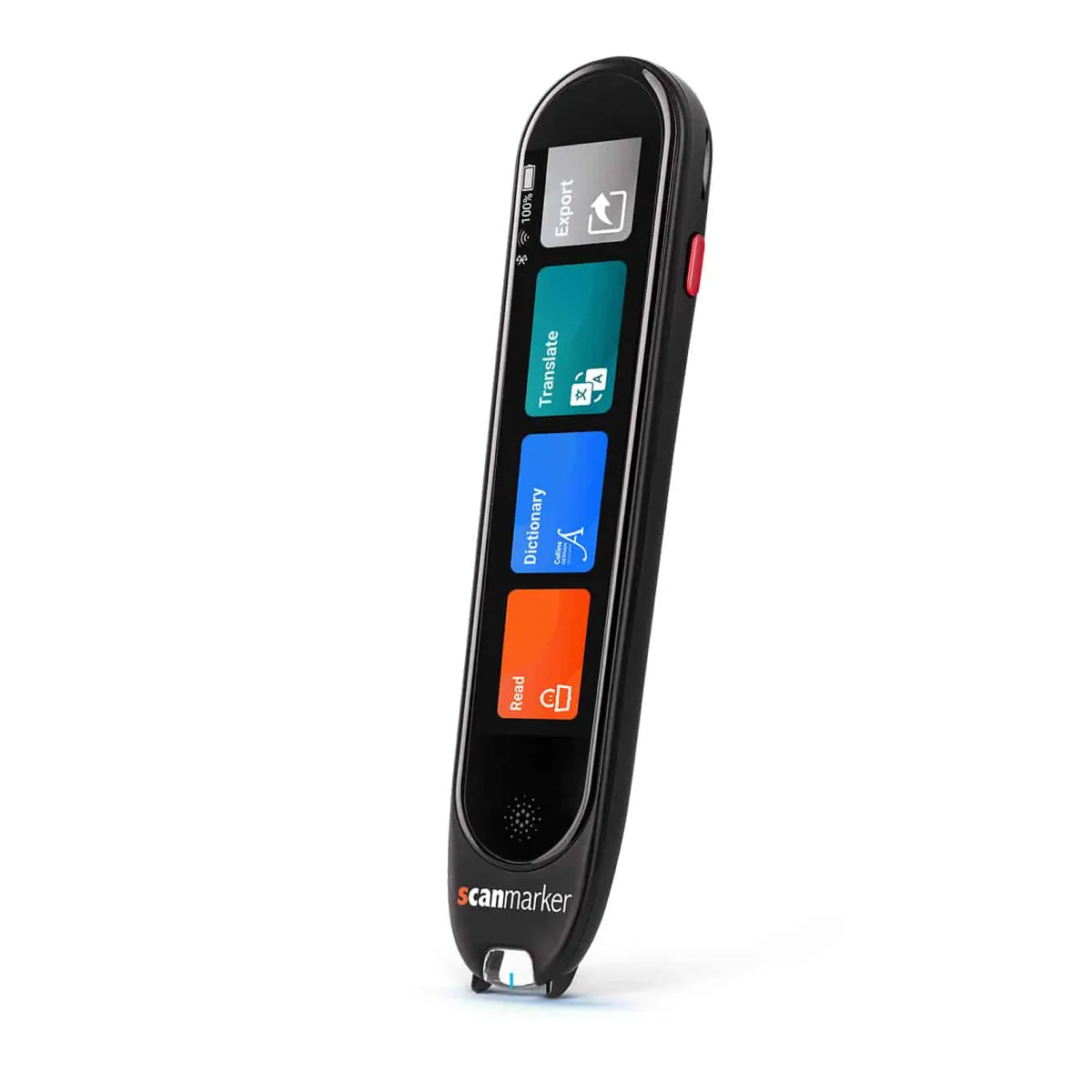
What we actually looked at
Three things separate a genuinely useful review from a spec-sheet rewrite: real accuracy across varied print — textbooks, worksheets with tight margins, magazine columns, and low-contrast print, not just a clean demo page; real battery life under normal, intermittent use rather than the “up to X hours” marketing figure; and what breaks down after the first week, since the honeymoon period hides most usability problems.
Accuracy: where reader pens excel and where they struggle
Standard printed fonts in books, worksheets, and most textbooks scan with high reliability across current-generation devices — this is genuinely a solved problem at this point. Where accuracy drops: tight or unusual line spacing, where some devices struggle to isolate a single line when text is densely packed; handwriting, which no current reader pen handles reliably — a hardware limitation across the category, not a specific model’s failing; and low-contrast print, where light gray text or poor-quality photocopies reduce accuracy meaningfully.
Battery life: the gap between marketing and reality
Manufacturer battery claims are typically measured under ideal, continuous-use lab conditions. Real-world use — intermittent scanning throughout a school day or workday, with the device idling between uses — tends to run noticeably shorter than the advertised figure. Budget for roughly 60–70% of the stated battery life as a realistic planning number, and treat overnight charging as a non-negotiable habit rather than an occasional top-up.
What actually matters after week one
Whether it gets used unprompted, or ends up in a drawer, is the single strongest predictor of long-term value — does the device become a reflexive habit, or does it require remembering to grab? Speaker volume matters more than demo videos suggest once you’re in a real classroom or noisy household. And build quality on the scanning tip and window matters more for longevity than the outer shell material.
Standalone vs. connected: the real-world difference
Standalone devices win decisively on reliability in day-to-day use — no pairing issues, no dead phone battery interrupting a scan, no app update breaking functionality mid-semester. Connected models add genuinely useful features like syncing to notes apps and broader software updates, but introduce more points of failure. For most households and classrooms, standalone wins the reliability test that matters most.
Where reviews online get it wrong
Watch for reviews that praise “up to 30 languages” without noting how many are available offline versus requiring an internet connection — this distinction matters enormously for classroom and travel use, and it’s the single most common place marketing language gets rounded up into something better than reality.
FAQ
Are reader pen reviews on marketplaces trustworthy?
Partially — they’re useful for catching manufacturing defects and initial setup problems, since most reviews are posted in the first few weeks of ownership. They’re less reliable for long-term durability or battery degradation, which only shows up after months of use.
What’s the biggest complaint across reader pen reviews?
Overstated offline language counts and battery life are the two most consistent gaps between marketing claims and real-world reported experience.
Do more expensive reader pens get better reviews?
Not proportionally — price correlates with added features like translation and dictionary lookup more than with core scanning accuracy, which is fairly consistent across the mid-to-premium tier.
How long do reader pens typically last before needing replacement?
Most well-maintained units last several years; battery capacity degradation, rather than mechanical failure, is the most common reason people eventually replace one.
Related guides
The Best Reader Pens Ranked for 2026
Important: Information in this guide is provided for general purposes and is not a substitute for professional medical, vision, or accessibility advice. A reading pen is an assistive tool that provides access to printed text — it does not diagnose, treat, or correct any reading, vision, or attention-related condition. Last reviewed: August 2026.
← All 34 guides